12 · Oral & maxillofacial surgery
Mouth sores that don't heal: when to get a biopsy
Canker sores are the most common cause of painful mouth sores, and they heal on their own. What doesn't heal, or an unexplained white or red patch, needs a closer look, often with a biopsy. I am an oral and maxillofacial surgeon (UNAM), certified by the Mexican Board of Oral and Maxillofacial Surgery, a professor in the Department of Diagnostic and Surgical Sciences at the University of Costa Rica School of Dentistry since 2006, and I see patients in Tower 1 of Hospital CIMA.
Book a visit soon if you have an unexplained sore lasting more than 3 weeks or a red patch. Go to the emergency room if it bleeds and pressure doesn't stop it, if your face or neck swells quickly or with a fever, or if it's hard to swallow or breathe.
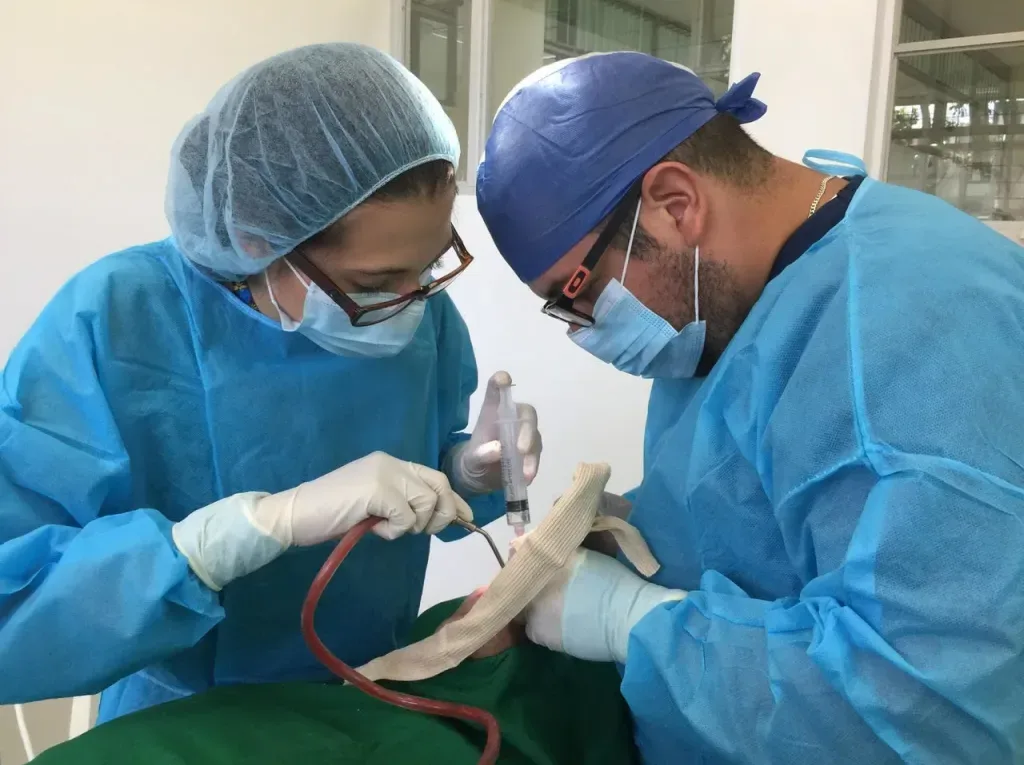
- Anesthesia
- Local
- Length
- Short: the sample takes a few minutes
- Results
- Days to a few weeks
- Consultation
- 60,000 colones · by video, 20,000
When it's indicated
- An unexplained sore lasting more than 3 weeks.
- A sore with a likely cause — a broken tooth, a rubbing denture — that hasn't healed 2 weeks after removing it.
- A red or red-and-white patch (erythroplakia or erythroleukoplakia).
- A white patch that doesn't rub off and has no other explanation (leukoplakia).
- A lump on the lip or inside the mouth, or one in the neck that persists without explanation.
- A papilloma or another cauliflower-like lesion: it's benign, but some lesions that look like one can be cancer, especially on the gums and in older people.
Before surgery
- Take a dated photo when you notice it. I can guide you by video, but the exam and the biopsy are in person.
- If something rubs it — a broken tooth, a loose denture — tell me: sometimes the first step is fixing that.
- Bring a list of your medications. If you take blood thinners, don't stop them on your own: stopping is associated with a higher risk of blood clots. I coordinate with your doctor.
- If the result scares you, tell me: anxiety can make people put off the diagnosis, and the American Dental Association guideline stresses talking it through.
How I plan it
How I do it
- 01ConsultationI examine the lesion and your whole mouth, and together we decide whether removing the cause is enough or a biopsy makes sense.
- 02Local anesthesiaI numb only the area. You feel pressure, but it should not hurt; if you feel anything, I add more anesthetic.
- 03The sampleI remove the whole lesion or a piece of it — a papilloma, with a margin of healthy tissue — and close with a few stitches. Taking the sample takes a few minutes.
- 04PathologyA pathologist examines it under the microscope: what it is, whether there is dysplasia (cell changes) and what grade. Moderate or severe dysplasia carries a much higher risk of transformation than mild.
Recovery
- When the anesthesia wears off, expect mild discomfort that usually lasts a few days; we manage it with medication.
- For the first few days, soft, cool food, nothing spicy or acidic.
- A little blood in your saliva on the first day is normal: press with gauze. If pressure doesn't stop it, call the office or go to the emergency room.
- Brush gently around the wound and don't smoke while it heals. The stitches fall out on their own or are removed at the follow-up.
- Results come back in days to a few weeks. If it's leukoplakia or lichen planus, follow-up continues: in one review, their estimated annual transformation risk was 1.56% and 0.28%, so it is periodic and long term.
Risks and how I prevent them
- Bleeding
- It's usually mild and stops with pressure. With direct oral anticoagulants, bleeding after mouth procedures was similar whether people continued them (11.8%) or stopped them (13.5%), and all of it was controlled with local measures.
- Changed sensation
- Uncommon, near the nerves of the lower lip or the tongue, so I plan the incision based on where the lesion is.
- Infection or the wound opening
- As with any wound in the mouth; it's prevented with gentle hygiene and no smoking. If you notice pus or a fever, call the office.
- Needing another procedure
- If the result doesn't explain what's visible, another biopsy makes sense. A papilloma can come back: in one case series it recurred less with at least 3 mm of healthy tissue around it, which is why I remove it with a margin.
- Putting off the biopsy
- This is a risk too: early detection of potentially malignant lesions and mouth cancer can improve the outlook.
Other options
- Removing the cause and waiting two weeks
- If something is likely rubbing it and there are no warning signs, this is the right step: most sores from rubbing heal within two weeks once the cause is removed. If it doesn't heal, I biopsy it.
- No biopsy, if it's a typical canker sore
- Shallow and well defined, it heals on its own in one to two weeks. A topical steroid or low-level laser eases the pain and shortens healing, although they are not proven to keep it from coming back.
- Lights, stains or brushings
- None has shown enough accuracy to be used routinely as a screening tool. A biopsy remains the first choice; brush cytology is reserved for specific situations we agree on.
Frequently asked questions
How long should I wait before getting a sore that won't heal checked?
Sources give two time frames that measure different things. With a likely cause, the cause is removed and, if the sore hasn't healed within 2 weeks, the WHO recommendation cited in a review is to biopsy it. With no explanation and more than 3 weeks, the UK's NICE guidance recommends considering an urgent suspected-cancer referral. When in doubt, don't wait.
Is a mouth sore that won't heal cancer?
The most common cause of painful mouth sores is canker sores, estimated to affect 10% to 25% of people, depending on the source. But a sore that doesn't heal shouldn't be written off as rubbing: other causes, including a tumor, need to be ruled out, and a biopsy is how you find out.
What are the warning signs of mouth cancer?
Per NICE, to get checked promptly: an unexplained sore lasting more than 3 weeks, a red or red-and-white patch, a lump on the lip or in the mouth, or one in the neck that persists. It's also worth getting checked for unexplained bleeding or pain, a numb area, or a tooth that loosens for no reason.
What does a white or red patch in the mouth mean?
A white patch that doesn't rub off and has no other cause is called leukoplakia; a red one, erythroplakia. In follow-up studies, about 9.5% of leukoplakias became cancer; for red patches, 19.9% to 33.1%, depending on the review. That's why they need close follow-up, and a biopsy tells us what they are.
What is an oral biopsy like, and does it hurt?
Under local anesthesia, in a few minutes and with a few stitches. You usually feel pressure; if anything hurts, I add more anesthetic. Afterwards, mild discomfort for a few days.
When are the results ready, and what if they find something?
From days to a few weeks, and we go over them together. If they show dysplasia, its grade helps decide the next step. If they show cancer, I calmly explain the diagnosis and what comes next, with other specialists when needed.
How much does an oral biopsy cost in Costa Rica?
It depends on the lesion's size and location, so I don't publish a price. A consultation is 60,000 colones, or 20,000 by video; after examining you, I give you the cost.
Sources
- 1.NICE — Suspected cancer: recognition and referral (NG12). Recommendations organised by site of cancer. National Institute for Health and Care Excellence, UK, 2015.
- 2.Abati S et al. — Oral Cancer and Precancer: A Narrative Review on the Relevance of Early Diagnosis. Int J Environ Res Public Health, 2020.
- 3.Ashrafi F et al. — Oral squamous cell carcinoma misinterpreted as reaction to chronic mechanical trauma: report of two cases and critical review of the literature. Swiss Dent J, 2025.
- 4.Lingen MW et al. — Evidence-based clinical practice guideline for the evaluation of potentially malignant disorders in the oral cavity: A report of the American Dental Association. J Am Dent Assoc, 2017.
- 5.Urquhart O et al. — Living evidence-informed guideline on the early detection of oral squamous cell carcinoma and potentially malignant disorders: Cytology adjuncts to determine the need for biopsy, Version 2026 1.0. J Am Dent Assoc, 2026.
- 6.Iocca O et al. — Potentially malignant disorders of the oral cavity and oral dysplasia: A systematic review and meta-analysis of malignant transformation rate by subtype. Head Neck, 2020.
- 7.Lorenzo-Pouso AI et al. — Critical update, systematic review, and meta-analysis of oral erythroplakia as an oral potentially malignant disorder. J Oral Pathol Med, 2022.
- 8.Le Joncour A et al. — [Idiopathic and secondary recurrent aphthous stomatitis: A narrative review]. Rev Med Interne, 2026.
- 9.Jian Y et al. — Efficacy and safety of thalidomide for recurrent aphthous stomatitis: a systematic review and meta-analysis of randomized controlled trials. BMC Oral Health, 2024.
- 10.Al-Aizari NA et al. — Evidence-based recommendations for the treatment of recurrent aphthous stomatitis: insights from an umbrella review. J Dermatolog Treat, 2026.
- 11.Nammour S et al. — Success Rate of Benign Oral Squamous Papilloma Treatments After Different Surgical Protocols (Conventional, Nd:YAG, CO2 and Diode 980 nm Lasers): A 34-Year Retrospective Study. Photobiomodul Photomed Laser Surg, 2021.
- 12.Bao Z et al. — Clinicopathologic features of oral squamous papilloma and papillary squamous cell carcinoma: a study of 197 patients from eastern China. Ann Diagn Pathol, 2012.
- 13.Manfredi M et al. — World workshop on oral medicine VII: Direct anticoagulant agents management for invasive oral procedures: A systematic review and meta-analysis. Oral Dis, 2019.
- 14.Engelen ET et al. — Antifibrinolytic therapy for preventing oral bleeding in people on anticoagulants undergoing minor oral surgery or dental extractions. Cochrane Database Syst Rev, 2018.
Reviews from my patients (not necessarily about this procedure)
«Desde que entramos al área de parqueo se siente la seguridad y confianza, la recepcionista muy amable y simpática, poco antes de la hora de la cita nos avisan que había un pequeño atraso por una complicación con el paciente que tenía el Dr. Torres en ese momento la espera no fue larga y de todos modos el área de espera es muy amplia y agradable, El Dr. Torres muy amable y profesional en todo momento, no escatimó tiempo para dar una amplia explicación del procedimiento, en general mi esposa y yo nos sentimos muy cómodos y sobretodo con mucha confianza de estar en las manos adecuadas.Definitivamente 100% recomendados !»«El Doctor Ronald Torres es un excelente profesional. Lo recomiendo 100%. Su trato siempre ha sido amable, cortes, profesional. Se interesa en comprender la necesidad del paciente, y en todo momento trata que este comprenda bien los alcances del procedimiento a realizar. Ya me ha extraido dos cordales, y puedo decir que me fue muy bien. Puede tener confianza de buscar al Dr. Ronald, que le aseguro quedara satisfecho con su atencion.»«Excelente profesional, impecable en la técnica de su especialidad y con un trato humano digno de resaltar. Desde el día uno nos sentimos cómodos con él y esto se mantuvo y se ha mantenido hasta el día de hoy, en donde estamos ya con citas de mero seguimiento. La intervención quirúrgica realizada fue un éxito y el costo muy razonable. La verdad que gracias a Dios tomamos una excelente decisión con él. Súper recomendado.»«Mi hijo Luis Guillermo se realizó una cirugía maxilofacial con el doctor Torres y su equipo, el resultado fue y es a hoy excelente, recibió un servicio excelente de seguimiento después de su cirugía.Le cambió mucho la vida a mi hijo de forma positiva , una gran inyección de seguridad y autoestima.Como padres nos sentimos muy agradecidos y es de esas inversiones que valen la pena .»Other procedures
- 01Wisdom teeth surgery
- 02Dental implants
- 03All-on-4 immediate full arch
- 04Orthognathic surgery
- 05Sinus lift
- 06TMJ treatment and surgery
- 07Facial trauma
- 08Jaw cysts and tumors
- 09Buccal fat removal
- 10Extractions and abscesses
- 11Bone grafting and socket preservation
- 13Zygomatic implants
- 14Video consultation and second opinion