11 · Oral & maxillofacial surgery
Dental bone grafting and socket preservation in Costa Rica
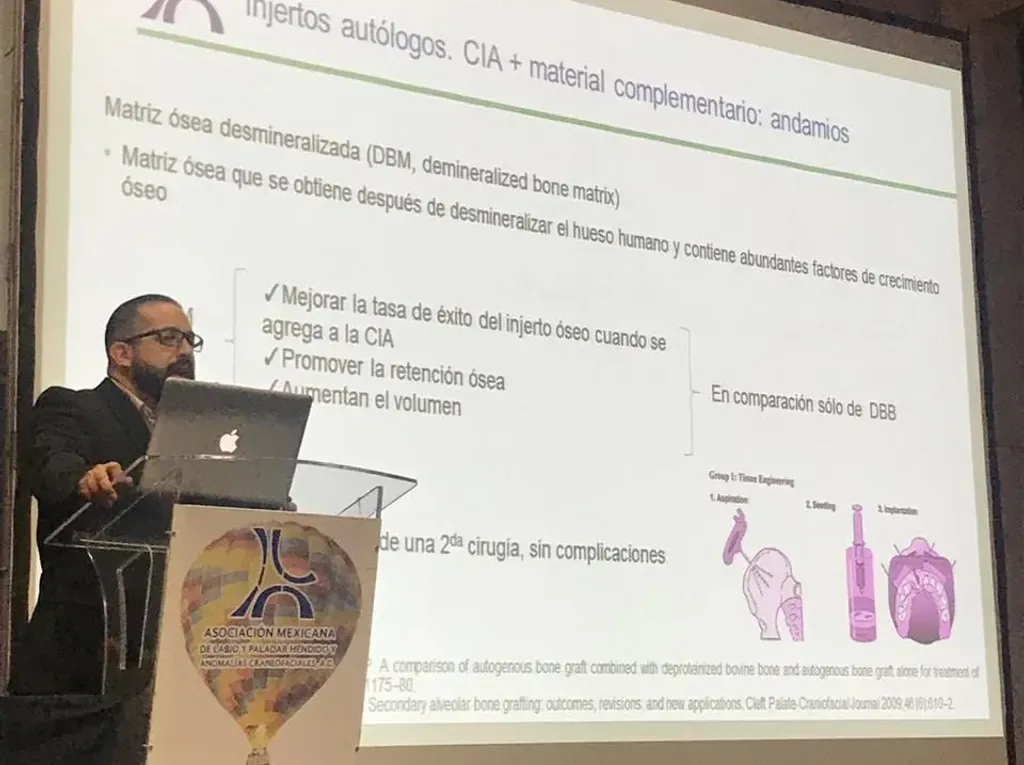
When a tooth comes out, the bone that held it shrinks, and that's exactly the bone an implant needs later. Before I take a tooth out, I plan what comes next: preserving the socket at the same visit, rebuilding later, or choosing an implant that doesn't need a graft. It's a subject I teach: in 2018 I gave a talk on atraumatic extraction and socket preservation at the National Autonomous University of Honduras. I'm an oral and maxillofacial surgeon (UNAM), certified by the Mexican Board of Oral and Maxillofacial Surgery, a University of Costa Rica professor since 2006, and I see patients in Tower 1 of Hospital CIMA.
Swelling spreading toward your eye or neck, fever, or trouble swallowing, breathing or opening your mouth: go to the emergency room right away. Bleeding that doesn't stop when you bite on gauze, pus, or a lot of graft coming out: message me or call the office.
- Imaging
- X-ray or 3D CT scan (CBCT)
- Material
- Your own, donor, animal-derived or synthetic
- Healing
- Measured at 3 to 6 months in socket preservation studies
- Consultation
- 60,000 colones · by video, 20,000
When it's indicated
- You're having a tooth removed and want an implant there later, not the same day.
- It's an area where losing width would compromise the implant or the appearance, like the front teeth.
- It's a molar: in a review of molar sites, preservation reduced extra grafting when the implant went in.
- The bone is too narrow or too low for the implant, because the tooth was lost long ago or after an infection, a cyst, an injury or a failed implant.
Before surgery
- Already have X-rays or a CT scan? Send them ahead: we can review them by video.
- If you take blood thinners, don't stop them on your own: I coordinate with your doctor. Tell me if you take bisphosphonates or denosumab, or have had head and neck radiation.
- If you have diabetes, I order an HbA1c test, as a review recommends when planning implants.
- If you smoke, stop before surgery and while you heal: it's linked to more implant failures and bone loss.
- If you'd rather avoid animal or human materials, tell me: there are synthetic options.
How I plan it
How I do it
- 01AnesthesiaLocal and, if we agree on it, sedation, with fasting and someone to take you home. You feel pressure, but it should not hurt.
- 02Atraumatic extractionI remove the tooth protecting the socket walls, without levering against the bone. When possible, without lifting the gum: in trials this gave similar bone changes, with less pain.
- 03Filling and sealingI fill the socket with particulate graft and cover it with a collagen membrane or sponge.
- 04If bone is already missingI do guided bone regeneration (particulate graft under a membrane that keeps the gum out of the defect) or fix a block with small screws, and close without tension.
- 05Follow-up and imagingI check the wound and, before the implant, confirm with an image that the bone is ready.
Recovery
- The first few days feel like an extraction: pain, swelling and some redness.
- Cold packs outside, soft food and medication on schedule; no smoking, straws or forceful spitting.
- A few graft grains may come out; if many do or the membrane shows, message me.
- Socket preservation: studies measured the bone after 3 to 6 months of healing; before the implant, I confirm it with an image.
- Ridge augmentation: usually more months, with no well-supported number; with your own bone the donor area heals too.
Risks and how I prevent them
- Wound problems or infection
- Pain, swelling, slow healing, an exposed membrane and partial graft loss are described, with no serious adverse events in the Cochrane review; infection can also occur. I close without tension; if it happens, I clean the area and consider antibiotics.
- Needing more graft anyway
- Preservation reduces shrinkage; it doesn't eliminate it. Cochrane found no evidence of a difference in extra grafting; a small review of molar sites did find less. If needed, it goes in during the implant surgery.
- The graft shrinking or failing
- In one review, animal-derived blocks failed in 6.82% and blocks of your own bone in 6.1% (far fewer of these were studied). Your own bone shrank more; animal-derived blocks had fewer sensory problems and slightly lower implant survival. If volume falls short, I add more graft.
- Donor-site discomfort
- Taking bone from the chin caused pain, changes in skin sensation and healing problems; patients preferred the back of the lower jaw (the ramus), taken under local anesthesia. When the case allows, I choose the ramus or a substitute.
- A nearby nerve or sinus
- In the lower jaw the lip can be left numb; in the upper jaw an opening into the sinus can form. I prevent it by measuring those distances on the CT scan and, if it happens, follow it closely.
Other options
- Letting it heal on its own
- If you're not getting an implant (say, with a bridge or a removable denture), preservation often isn't needed. If surgery isn't needed, I'll tell you.
- Same-day implant
- If the socket is healthy and the bone allows it, the implant goes in at the same visit as the extraction.
- An implant that avoids the graft
- With 4 to 9 mm of bone in the upper back teeth, at one year it's unclear whether a sinus lift does better or worse than a short implant (5 to 8.5 mm), and sinus lifts had more complications. With extensive upper-jaw bone loss, zygomatic implants, anchored in the cheekbone, are frequently indicated instead of major reconstructions.
Frequently asked questions
What happens to the bone after a tooth extraction?
Without the tooth, the ridge shrinks, fastest in the first 3 to 6 months. Without a graft, 29% to 63% of the width and 11% to 22% of the height is lost in 6 months.
Do I always need a bone graft to get an implant?
No. With enough bone, the implant goes in without a graft. If bone is short, sometimes a short implant works, sometimes the graft goes in during the implant surgery, and sometimes it's better to rebuild first: I decide with the CT scan.
When does it make sense to preserve the socket at the same visit?
When you'll want an implant there and it isn't going in the same day. Compared with healing on its own, it saved 1.18 to 1.99 mm of width on average, depending on the review; Cochrane rates that evidence as very uncertain and found no evidence of a difference in implant failure or appearance.
Where does the graft material come from? Is my own bone better?
It can be your own bone (autograft), human donor bone (allograft), treated animal bone, usually bovine or porcine (xenograft), or synthetic. For socket preservation, Cochrane found none clearly better, though another review favored animal-derived or donor material. For sinus lifts and ridge augmentation, there's no evidence that your own bone is superior, and taking it adds a second wound.
How long do I wait before the implant?
Socket preservation studies measured the bone after 3 to 6 months of healing. Ridge augmentation usually takes longer. I don't give a fixed number: I confirm it with an image.
How much does a dental bone graft cost?
It depends on the defect, the material and whether it's done with the extraction or the implant, so I don't publish surgery prices. A consultation is 60,000 colones, or 20,000 by video; with your images, I give you the cost for your case.
Sources
- 1.Tan WL et al. — A systematic review of post-extractional alveolar hard and soft tissue dimensional changes in humans. Clin Oral Implants Res, 2012.
- 2.Avila-Ortiz G et al. — Effect of alveolar ridge preservation interventions following tooth extraction: A systematic review and meta-analysis. J Clin Periodontol, 2019.
- 3.Atieh MA et al. — Interventions for replacing missing teeth: alveolar ridge preservation techniques for dental implant site development. Cochrane Database Syst Rev, 2021.
- 4.Wei YP et al. — Alveolar ridge preservation at molar extraction sites: a systematic review and meta-analysis. J Evid Based Dent Pract, 2025.
- 5.Atieh MA et al. — Flapped versus flapless alveolar ridge preservation: a systematic review and meta-analysis. Int J Oral Maxillofac Surg, 2022.
- 6.Al-Nawas B, Schiegnitz E — Augmentation procedures using bone substitute materials or autogenous bone - a systematic review and meta-analysis. Eur J Oral Implantol, 2014.
- 7.Nkenke E, Neukam FW — Autogenous bone harvesting and grafting in advanced jaw resorption: morbidity, resorption and implant survival. Eur J Oral Implantol, 2014.
- 8.Sánchez-Labrador L et al. — Clinical performance of alveolar ridge augmentation with xenogeneic bone block grafts versus autogenous bone block grafts. A systematic review. J Stomatol Oral Maxillofac Surg, 2021.
- 9.Tyndall DA et al. — Position statement of the American Academy of Oral and Maxillofacial Radiology on selection criteria for the use of radiology in dental implantology with emphasis on cone beam computed tomography. Oral Surg Oral Med Oral Pathol Oral Radiol, 2012.
- 10.Calciolari E et al. — Tobacco Smoking and Smoke-Free Products as Risk Factors for Dental Implants: A Systematic Review. Clin Oral Implants Res, 2026.
- 11.Bencze B et al. — Prediabetes and poorly controlled type-2 diabetes as risk indicators for peri-implant diseases: A systematic review and meta-analysis. J Dent, 2024.
- 12.Esposito M et al. — Interventions for replacing missing teeth: augmentation procedures of the maxillary sinus. Cochrane Database Syst Rev, 2014.
- 13.Moraschini V et al. — Survival and complications of zygomatic implants compared to conventional implants reported in longitudinal studies with a follow-up period of at least 5 years: A systematic review and meta-analysis. Clin Implant Dent Relat Res, 2023.
Reviews from my patients (not necessarily about this procedure)
«Desde que entramos al área de parqueo se siente la seguridad y confianza, la recepcionista muy amable y simpática, poco antes de la hora de la cita nos avisan que había un pequeño atraso por una complicación con el paciente que tenía el Dr. Torres en ese momento la espera no fue larga y de todos modos el área de espera es muy amplia y agradable, El Dr. Torres muy amable y profesional en todo momento, no escatimó tiempo para dar una amplia explicación del procedimiento, en general mi esposa y yo nos sentimos muy cómodos y sobretodo con mucha confianza de estar en las manos adecuadas.Definitivamente 100% recomendados !»«El Doctor Ronald Torres es un excelente profesional. Lo recomiendo 100%. Su trato siempre ha sido amable, cortes, profesional. Se interesa en comprender la necesidad del paciente, y en todo momento trata que este comprenda bien los alcances del procedimiento a realizar. Ya me ha extraido dos cordales, y puedo decir que me fue muy bien. Puede tener confianza de buscar al Dr. Ronald, que le aseguro quedara satisfecho con su atencion.»«Excelente profesional, impecable en la técnica de su especialidad y con un trato humano digno de resaltar. Desde el día uno nos sentimos cómodos con él y esto se mantuvo y se ha mantenido hasta el día de hoy, en donde estamos ya con citas de mero seguimiento. La intervención quirúrgica realizada fue un éxito y el costo muy razonable. La verdad que gracias a Dios tomamos una excelente decisión con él. Súper recomendado.»«Mi hijo Luis Guillermo se realizó una cirugía maxilofacial con el doctor Torres y su equipo, el resultado fue y es a hoy excelente, recibió un servicio excelente de seguimiento después de su cirugía.Le cambió mucho la vida a mi hijo de forma positiva , una gran inyección de seguridad y autoestima.Como padres nos sentimos muy agradecidos y es de esas inversiones que valen la pena .»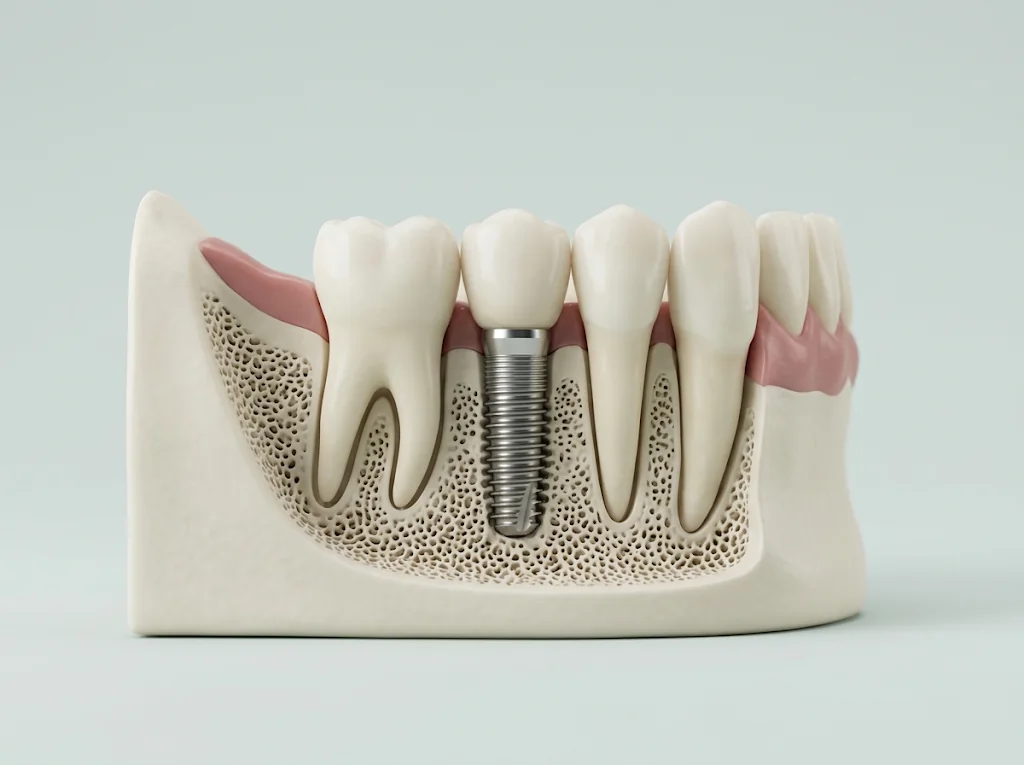
Other procedures