10 · Oral & maxillofacial surgery
Tooth abscess: what to do, when it's urgent and when to pull the tooth
An abscess is a pocket of pus from a tooth or gum infection. Guidelines say the cause comes first — draining it, treating the nerve or taking the tooth out — and antibiotics are reserved for an infection that spreads or causes fever. If the tooth can no longer be saved, I remove it atraumatically, without breaking the bone that will later hold an implant. I'm an oral and maxillofacial surgeon (UNAM), a University of Costa Rica dentistry professor since 2006, and I've lectured on atraumatic extraction and socket preservation, including in Honduras (2018).
Swelling that spreads toward your eye or neck or under your tongue, fever, or trouble swallowing, breathing or opening your mouth: go to the emergency room right away. If the pain and swelling stay in one spot, call the office.
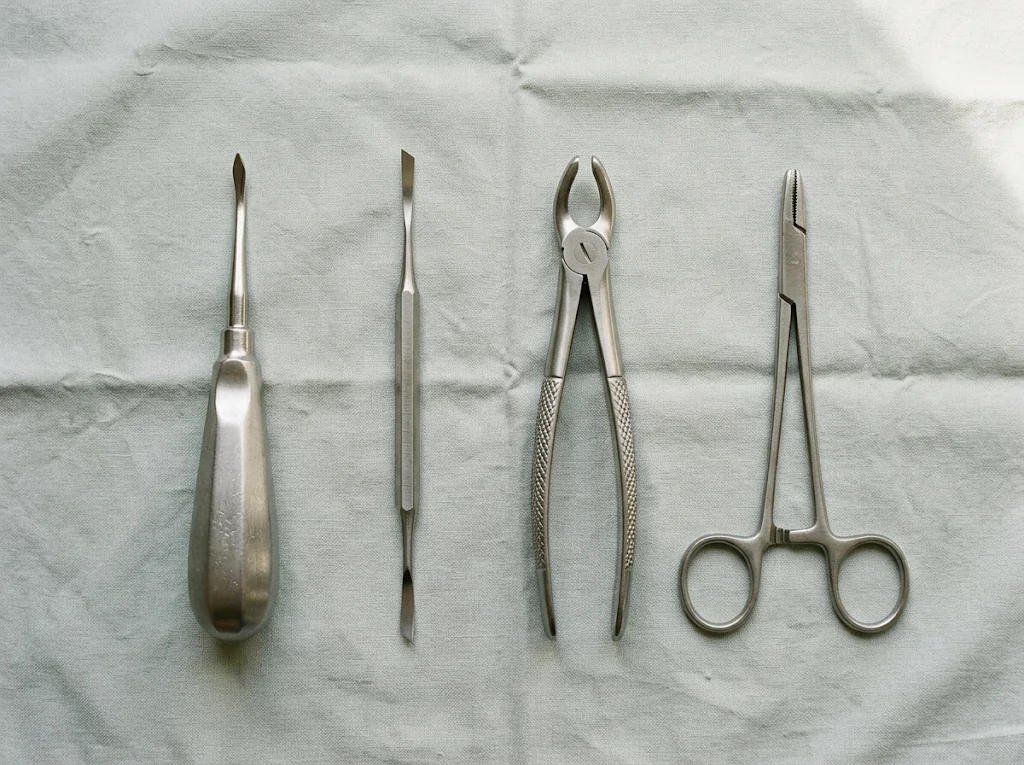
- Anesthesia
- Local; sedation depending on the case
- Imaging
- X-ray; CT scan if the case calls for it
- Abscess
- The cause is treated first
- Consultation
- 60,000 colones · by video, 20,000
When it's indicated
- An abscess: swelling, pus, a sensitive gum and toothache.
- A broken tooth, or decay that can no longer be restored.
- A root infection that a root canal didn't or can't clear up.
- A loose tooth from gum disease, the kind that starts with bacterial plaque.
- Roots left behind, trapped teeth, or baby teeth that don't fall out on time.
Before surgery
- If you have an X-ray or CT scan, send it ahead; we can review it by video.
- Bring a list of your medications. Don't stop blood thinners on your own (stopping them is associated with a higher risk of blood clots): I coordinate with your doctor.
- Tell me if you take osteoporosis medication or have a weakened immune system: we plan with your doctor.
- If you smoke, stop before and while you heal: dry socket is more common in smokers.
- With sedation: fast as I instruct and come with someone; you can't drive that day.
How I plan it
How I do it
- 01ConsultationI examine you with the imaging and tell you frankly whether the tooth can be saved.
- 02If there's an abscess, the source firstDrainage through a small incision inside the mouth (sometimes from outside in extensive cases) and treatment of the cause. I prescribe antibiotics for fever, feeling unwell, diffuse swelling or swollen lymph nodes, or if your health calls for it.
- 03Atraumatic extractionWith local anesthesia (plus sedation, if we agree on it) I free the tooth from the bone without fracturing the walls: you'll feel pressure; if anything hurts, tell me and I'll add more anesthesia. If it's broken, trapped or has curved roots, I open the gum, remove as little bone as possible and close with stitches.
- 04Socket preservation, if an implant followsI fill the socket with particulate graft covered by a collagen membrane; when possible, without lifting the gum, which in trials gave similar bone changes with less pain. It reduces shrinkage but doesn't eliminate it.
- 05When we finishI control the bleeding and give you written instructions. I decide on preventive antibiotics based on your health and infection risk. You can message me while you recover.
Recovery
- First hours: bite on the gauze and use a cold pack outside; some blood in your saliva is normal.
- First day: no vigorous rinsing, spitting, straws or smoking, to protect the clot.
- Discomfort usually lasts a few days: prescribed pain medication, soft food and gentle brushing.
- If severe pain starts between day 1 and day 5, it may be dry socket: message me.
- After drainage, the swelling should keep going down; if it grows or you get a fever, go to the ER.
- If we preserve the socket, studies measured the bone at 3 to 6 months; I schedule the implant with a new scan.
Risks and how I prevent them
- Bleeding
- It's almost always controlled with pressure or stitches. With newer oral blood thinners, bleeding after mouth procedures was similar whether people continued them (11.8%) or stopped them (13.5%); all were controlled with local measures.
- Dry socket
- The clot is lost: severe pain that usually starts between day 1 and day 5, sometimes with bad breath. It's associated with smoking: about 13.2% in smokers versus 3.8% in non-smokers. Protecting the clot helps prevent it; it's treated at the office.
- The infection spreading
- Among people seen in US emergency departments for a dental infection, 9.8% had a severe complication; among hospitalized surgical patients, 3.8% had systemic complications, more often with older age, chronic lung disease, alcohol dependence or infection in several areas (different populations: not combined). That's why it's treated early.
- Osteonecrosis with bisphosphonates
- With oral bisphosphonates, it's the most reported complication after an extraction, mostly in the back of the lower jaw (limited evidence). Tell me beforehand: I plan it with your doctor.
- Root, sinus or nerve
- Uncommon: a root fragment, an upper molar opening into the sinus or, near the nerve, a numb lip. That's why I study the imaging first.
- The bone shrinking
- If the socket heals on its own, within 6 months it loses 29% to 63% of its width and 11% to 22% of its height. Preservation prevented, on average, 1.18 to 1.99 mm of width loss depending on the review (very uncertain evidence, per Cochrane), with no serious adverse events reported.
Other options
- Saving the tooth
- If it can be restored, a root canal treats the infection and keeps the tooth, even if that means no surgery.
- Antibiotics alone
- They aren't proven to resolve an abscess without treating the tooth. The American Dental Association advises against them in most cases of localized pain or swelling in adults with a healthy immune system.
- Monitoring, without surgery
- A baby tooth that will fall out on its own, or a root with no infection or symptoms, can sometimes just be monitored.
Frequently asked questions
What should I do if I have a tooth abscess?
Get seen soon: it's resolved by removing the cause. Until then, don't pop it, don't use heat and don't take leftover antibiotics. With fever, swelling that spreads, or trouble swallowing, breathing or opening your mouth, go to the ER.
How can I reduce tooth abscess swelling?
By getting the pus out and treating the cause. A cold pack on the outside may ease it until you're seen, but it doesn't cure the infection.
What happens if the abscess bursts on its own?
The pain may ease, but the cause is still there and the infection can come back or spread: still get seen.
Will antibiotics clear up the abscess?
Alone, that isn't proven. Guidelines call for removing the source first; antibiotics are reserved for an infection that spreads or causes fever or feeling unwell.
Can the tooth be saved?
Often, yes: it depends on how much healthy tooth is left, the roots and the bone. If so, I refer you to your dentist or an endodontist.
What makes an extraction surgical?
A tooth broken at the gum line or trapped in the bone, or roots that are curved or near the nerve or sinus. You know this from the consultation.
How much does an extraction cost?
It depends on whether it's simple or surgical, how many teeth, any infection, and whether a CT scan or graft is needed; I don't publish surgery prices. A consultation is 60,000 colones (20,000 by video), where I give you the cost of your case.
Sources
- 1.Lockhart PB et al. — Evidence-based clinical practice guideline on antibiotic use for the urgent management of pulpal- and periapical-related dental pain and intraoral swelling: A report from the American Dental Association. J Am Dent Assoc, 2019.
- 2.Cope AL et al. — Systemic antibiotics for symptomatic apical periodontitis and acute apical abscess in adults. Cochrane Database Syst Rev, 2024.
- 3.Wu BW et al. — Prevalence and Risk Factors for Severe Complications of Odontogenic Infections. J Oral Maxillofac Surg, 2026.
- 4.Fischer M et al. — Predictors of systemic complications and prolonged hospitalization in odontogenic infections: a 12-year retrospective analysis of 997 cases. BMC Oral Health, 2025.
- 5.Manfredi M et al. — World workshop on oral medicine VII: Direct anticoagulant agents management for invasive oral procedures: A systematic review and meta-analysis. Oral Dis, 2019.
- 6.Engelen ET et al. — Antifibrinolytic therapy for preventing oral bleeding in people on anticoagulants undergoing minor oral surgery or dental extractions. Cochrane Database Syst Rev, 2018.
- 7.Dioguardi M et al. — Oral bisphosphonate-induced osteonecrosis complications in patients undergoing tooth extraction: a systematic review and literature updates. Eur Rev Med Pharmacol Sci, 2023.
- 8.Lodi G et al. — Antibiotics to prevent complications following tooth extractions. Cochrane Database Syst Rev, 2021.
- 9.Kuśnierek W et al. — Smoking as a Risk Factor for Dry Socket: A Systematic Review. Dent J (Basel), 2022.
- 10.Tyndall DA et al. — Position statement of the American Academy of Oral and Maxillofacial Radiology on selection criteria for the use of radiology in dental implantology with emphasis on cone beam computed tomography. Oral Surg Oral Med Oral Pathol Oral Radiol, 2012.
- 11.Tan WL et al. — A systematic review of post-extractional alveolar hard and soft tissue dimensional changes in humans. Clin Oral Implants Res, 2012.
- 12.Avila-Ortiz G et al. — Effect of alveolar ridge preservation interventions following tooth extraction: A systematic review and meta-analysis. J Clin Periodontol, 2019.
- 13.Atieh MA et al. — Interventions for replacing missing teeth: alveolar ridge preservation techniques for dental implant site development. Cochrane Database Syst Rev, 2021.
- 14.Atieh MA et al. — Flapped versus flapless alveolar ridge preservation: a systematic review and meta-analysis. Int J Oral Maxillofac Surg, 2022.
Reviews that mention this procedure
«El resultado de la extracción de muela fue EXCELENTE»«Excelente especialista, super recomendado, mi hijo tuvo la extracción de sus cordales y le fue super bien»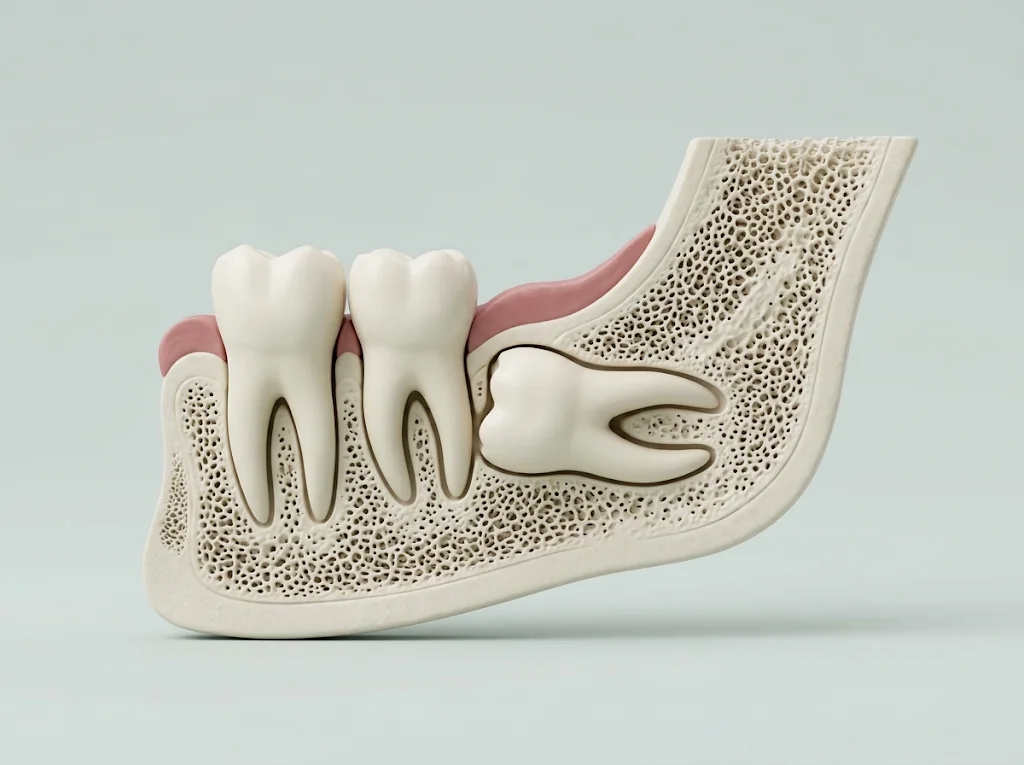 GuidesWhen should wisdom teeth come out (and when can they stay)?
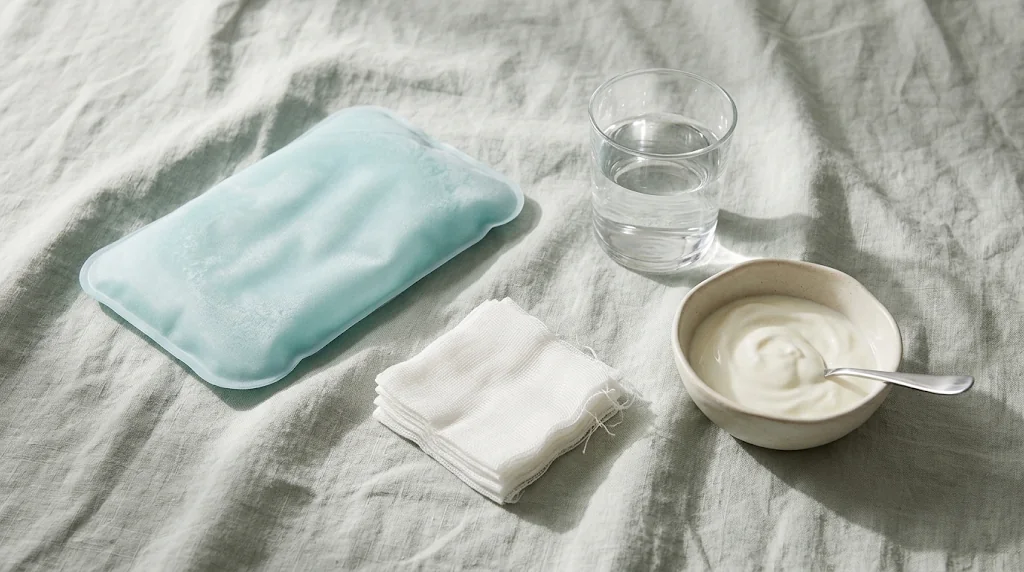 GuidesAfter wisdom teeth removal: a day-by-day guide
Other procedures
- 01Wisdom teeth surgery
- 02Dental implants
- 03All-on-4 immediate full arch
- 04Orthognathic surgery
- 05Sinus lift
- 06TMJ treatment and surgery
- 07Facial trauma
- 08Jaw cysts and tumors
- 09Buccal fat removal
- 11Bone grafting and socket preservation
- 12Oral lesions and biopsy
- 13Zygomatic implants
- 14Video consultation and second opinion